Welcome to My Treasure Trove

2c46464b284203de4423fe3e0e3fd091.jpg

I’m not going to lie, I didn’t think I would be able to come up with a new blog title as quick as I did, and I definitely didn’t think I was actually going to be in love with it. Unsurprisingly, this title has alliteration in it just like my previous one, “Thinking With Tori.” I love adding alliteration into titles because I feel like it makes them more interesting and catchy. My previous title reflected that this blog is a place for my scattered thoughts about honors college and our readings, which it definitely still is. Now, I feel like my title reflects that my blog is a place for me to dive deep into the readings assigned and really pick out the things that stand out. It kind of reminds me of Ariel’s grotto in The Little Mermaid where she keeps all of the amazing trinkets that fascinate her that she finds on the land. The treasures in my trove are the thoughts that I come up with when thinking about the works we read. They’re definitely not all amazing in any way, shape, or form, but they each have their own uniqueness that makes them different. Each inspired me to become buried deeper and deeper into the text and actually look for what’s beneath the surface rather than what’s floating on the top like I would normally do if I was just reading on my own. There have also been many instances in the texts we’ve read in which the characters discussed finding or receiving treasures, like in the Odyssey when Odysseus receives amazing gifts wherever he goes. Unfortunately, I don’t have any posts left to complete for class, but who knows! Maybe inspiration will strike and I’ll be back to writing on here when I least expect it.

Blog Post #6

On November 15, 2018, Professor Chen gave a lecture entitled “Dura-Europas” that discussed a map of the city of the same name. The city was located near the bank of the Euphrates River and founded as a caravan city for trade. There were many cultures present throughout the city, as there were constantly new people passing through or settling down. I found it fascinating how there were so many different cultures present and how each of them was so tolerant of the others’ religions, allowing them to all coexist in the same area.

Dura-Europas was full of multiculturalism. There were many different religions spoken by the inhabitants, including Greek, Latin, Palmyrene, Aramaic, and Middle Persian. This has been evident to historians and archaeologists due to graffiti and inscriptions found on walls and pillars. The city was heavily involved in militarism, as they had to protect themselves from invaders multiple times throughout their existence. They had an entire military base and walls surrounding the city to ensure that they would be safe.

The most popular religion in the area was most likely paganism, as there were around eleven temples in the area. Each temple was dedicated to different gods and goddesses, with the main two being Zeus, the king of the gods, and Artemis, the goddess of the hunt, the moon, and chastity. There were also other temples that worshipped the same god or goddess but used different names for them. For example, the Temple of Azzanathkona was just another name for a temple of Artemis.

There is also evidence of the existence of Christians within the city. The Christians held their worship services in what was known as a “house church.” A wealthy member of the community would offer up their house for the rest of the people to come together in. There are multiple frescoes on the wall depicting Christian images like shepherds, miracles, and even three women visiting Christ’s tomb. There was also the presence of a baptismal font to formally induct individuals into the religion. The Christians did seem to worship out in the open, with no worries of persecution.


DurEuropos_exodus
A painting in the synagogue of Dura-Europos


The city also had a synagogue where the Jewish people held their worship services. Similar to the Christian’s church, it was two houses put together to make a religious space for the group. The synagogue is actually one of the oldest in the world. The space also had many different paintings on the walls, as the Jewish people ignored the second commandment that stated that they should not have any depictions and images of their faith. These paintings cover the entire walls of the assembly rooms, with images of various people and animals from the Torah. There are around 58 scenes in total, including Moses leading the people out of Egypt and receiving the Ten Commandments, and Ezekiel’s vision. They were a bit different from the paintings in the Christian house, as they were not frescoes but rather tempera, which was a form of painting involving egg yolk, over plaster.

Unfortunately, this city of cultural diffusion is in ruins today in modern-day Syria and has been heavily affected by illegal looting that is used to support terrorist groups. However, archaeologists are still trying to recover as many artifacts as possible from this city to uncover more information about the history.

Works Cited

Chen, Anne. “Dura-Europos.” Hofstra University Honors College, 15 Nov 2018, Hofstra University, Long Island, NY. Lecture.


Blog Post #5

On November 8th, 2018, Professor Daniels conducted a lecture entitled “Ibn Taymiyyah Against the Greek Logicians” on the work of the same title. Ibn Taymiyyah was one of the most controversial and outspoken Muslim theologians who was quite unpopular with the other scholars of his time. In his work, he criticizes the ideas of the Greek thinkers and argues that metaphysics and logic are connected. What led this man to become so radical in his thoughts?

Ibn Taymiyyah was born in Mesopotamia in 1263 but only lived there for a short time. As a result of the Mongol invasions, Taymiyyah’s family fled the country and moved to Damascus. He grew up there, learning about different Muslim scriptures, ideas, and traditions as well as about Sufi theology. He was well versed in all 4 schools of Sunni jurisprudence, and even became an expert in ten other fields, including mathematics. He also gained some of his knowledge from sermons that his father would deliver in the Umayyad mosques.

Taymiyyah frequently ran into trouble with authorities, being prosecuted six times throughout his life. For example, he wrote a book in which he criticized individuals who visited the tombs of prophets and saints, saying that those who did commit bidah, or innovation. Critics discovered the book years after it was released and imprisoned him and his student, Ibn Qayyim, for their beliefs (Daniels).

He frequently ran into trouble with authorities, being prosecuted six times throughout his life. For example, he wrote a book in which he criticized individuals who visited the tombs of prophets and saints, saying that those who did commit bidah, or innovation. Critics discovered the book years after it was released and imprisoned him and his student, Ibn Qayyim, for their beliefs (Daniels).

When the Mongols eventually attacked Damascus from 1299-1303, Taymiyyah called for jihad against the rulers and their religion. He believed that their way of worship should not be validated and that they were not true Muslims.  He even led a resistance against the Mongols to demand that they release the prisoners that they had taken captive.

His interactions with the Mongols were likely the events that had the biggest impact on his works. He emphasized the importance of the Quran and the Sunnah, as he believed those were really the only two works in the Islamic faith that had authority. He had a very strict view of what the Muslim faith entailed and worked throughout his life to restore the beliefs of the religion. Anything that came after the first three generations, which was made up of Muhammad and his followers, was considered bidah and was not to be followed as it was forbidden.

Ibn Taymiyyah has had quite an influence on the world today as well. He has become an inspirational figure for political Islam, which is good in some ways, but extremists also use his works to justify their violence. His work is often part of the foundation for those looking to purify the Western world.

Works Cited

Daniels, Timothy. “Ibn Taymiyyah Against the Greek Logicians” Hofstra University Honors College, 8 Nov 2018, Hofstra University, Long Island, NY. Lecture.

“Ibn Taymiyyah.” New World Encyclopedia, New World Encyclopedia, 25 Jan. 2018, http://www.newworldencyclopedia.org/p/index.php?title=Ibn_Taymiyyah&oldid=1009124.


Blog Post #4

On November 1st, 2018, Professor Daniels gave a lecture entitled “The Prophet’s Night Journey and Heavenly Ascent” which discussed the work of the same title. The work is part of the Muslim faith and recounts the story of Muhammad as he discovers that he is a prophet and travels to the different levels of Heaven. Something that interested me about this work was the fact that the Islamic faith is so similar to the beliefs of Christianity, yet that isn’t really recognized by either faith.

The story of Muhammad starts with a visit from an angel by the name of Gibril. Gibril acts as the principal guide to Muhammad throughout his journey. This is extremely similar to the Angel Gabriel in the Christian faith, who acted as a guide for Mary when she discovered that she was chosen to be the Mother of Jesus, the son of God.


gabrielangelpaintingannunciationcreditrenatasedmakovaShutterstockcom
Angel Gabriel (Renata Sedmakova/Shutterstock.com)


One of the most obvious similarities between the two is that they are both monotheistic religions, meaning that there is only one superior being. For Christians, it is God the Father, and for Muslims, it is Allah. Each also has some form of Holy Scripture. For Christians, it is the Bible, which is the completed Word of God that was written by many with the help of divine inspiration. For Muslims, their scripture is known as the Quran, which is the Word of Allah written down as it was dictated to the prophet Muhammed. Both faiths also believe in the existence of many prophets who were sent by God and Allah, respectively. These prophets were chosen to spread the messages of their Lord. There are several prophets that the two religions share, such as Abraham and Moses.

Interestingly, the two religions differ when it comes to the topics of Jesus and Muhammad. Christians believe that Jesus is the Son of God who was born of the Virgin Mary and sent to save humanity. Muslims do acknowledge Jesus’ existence. In The Prophet’s Night Journey and Heavenly Ascent, Muhammad tells Allah, “You have taught Isa the Torah and the Evangel, and made him heal those born blind and the lepers, and raise up the dead with Your permission, and You have protected him and his mother from the cursed devil so that the devil had no path by which to harm them” (al-Maliki 30). In this instance, Jesus’ Hebrew name is used. Muhammad even encounters Jesus on one of the levels of Heaven. While they do believe he exists and that he was virgin-born, the Muslims do not believe that Jesus was the Son of God, but rather, just a prophet. Regarding Muhammad, Muslims believe that he was the last prophet sent by Allah, and, therefore, the final authority when it comes to spiritual matters. Christians, on the other hand, do not believe that Muhammad was any type of prophet or an important spiritual figure at all.

Discovering that there were this many similarities between the two religions was surprising to me, as I’ve gone to Catholic school my whole life and never really learned about other religions. I think it’s cool that there are so many things that correlate to one another, and maybe if more members or each faith were aware of this, there wouldn’t be as much hatred and discrimination regarding religion in the world.

Works Cited

Mālikī, Muḥammad ʻAlawī., and Gibril Fouad. Haddad. The Prophet’s Night Journey & Heavenly Ascent. Aqsa Publications, 2010.

Blog Post #3

46972471-god-sitting-on-cloud-and-knit-planet-earth-creation-of-earth-an-elderly-man-with-beard-in-white-clot
In this cartoon, God is shown creating the Earth by knitting it all together.

On October 25, 2018, Professor Karofsky gave a lecture titled “Augustine” on the teachings and philosophy of St. Augustine in relation to Christianity presented in his work titled City of God. Throughout her lecture, Professor Karofsky discussed Augustine’s beliefs about free will. I found it interesting that Augustine supported the existence of human free will,  the ability to choose for oneself, while also believing in predestination, meaning that God has foreknowledge of every event in a person’s life and whether or not they will achieve salvation. How is it possible to believe that the two could coexist?

C.S. Lewis has stated that “free will is perfected by God’s predestination, rather than eliminated.” Many, including myself, make the mistake of assuming that these two things cannot coexist. God does not see the future, but rather can see all. According to Christian teachings, He exists outside of time and has eternal knowledge as He is always present. Augustine writes, “Whatsoever a man suffers contrary to his own will, he ought not to attribute to the will of men, or of angels, or of any created spirit, but rather to His will who gives power to wills” (Augustine 5.10). God is almighty and powerful, and therefore gives us the power to use our free will. Predestination is more-so God’s control over His creation while free will is human beings’ control over their own lives.

In our discussion with Professor Keller following the lecture, we talked about how one’s foreknowledge of an event or decision does not take away an individual’s free will. For example, if I were to be asked whether I wanted coffee or tea, my friends might know what I was going to decide before I even vocalized it just because they know that I really like coffee. A parent can put a bowl of ice cream and a bowl of broccoli in front of their child and know that they will choose the ice cream because they hate vegetables. A person’s knowledge of what you are going to choose does not change the fact that you have free will. Therefore, why should God’s knowledge be any different? God, as well as  our friends, may know the outcome of the decision, but they are not forcing us to choose anything.

Professor Karofsky raised another important point. If free will did not actually exist, why would sinning exist? It would not make sense for God to punish us for our actions if he was the one controlling them. In addition to that, why would there be any evil in the world if that was the case? God encourages his people to act peacefully and love one another as He loves us. Therefore he would not control people to commit heinous acts to hurt His Creation. Unfortunately, most sins, and most actions in general, are committed out of necessity and because of human imperfection. God does not make us perfectly follow his rules and strictures, such as the Ten Commandments, but allows us to reconcile for our actions when we do not.

According to the philosophy of Augustine, God may influence our actions and have foreknowledge of them, but does not ultimately choose them for us. We must use our own free will, as well as the goodness of our souls and consciousness, to determine the right path to take in our lives.

Works Cited

Augustine, and Marcus Dods. The City of God. T. & T. Clark, 1878.

“C.S. Lewis Institute – Time and Eternity.” Peter Kreeft, http://www.peterkreeft.com/audio/20_cslewis_time-eternity.htm.

Karofsky, Amy. “Augustine.” Hofstra University Honors College, 25 Oct 2018, Hofstra University, Long Island, NY. Lecture.

Blog Post #2

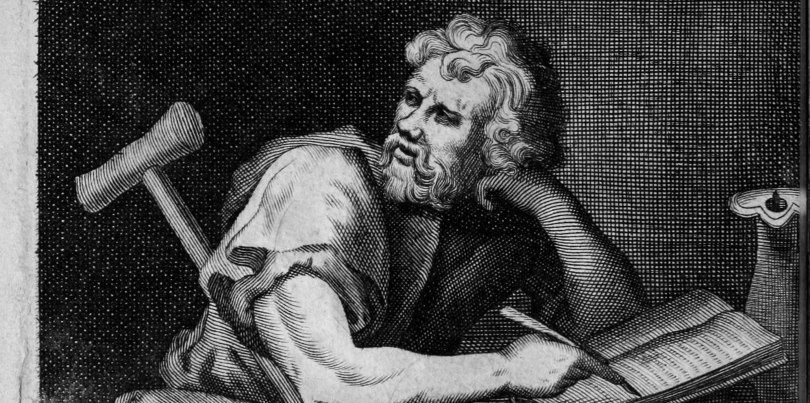
On October 18th, 2018, Professor Limnatis gave a lecture titled “Stoic Border-Crossing(s)” that discussed Stoicism and The Enchiridion by Epictetus. The goal of stoicism is to teach individuals self-control courage as they experience various emotions.  The Enchiridion focuses on Epictetus’ philosophy and how he believes one should live life. The title of the work means “ready to hand,” quite ironic as he mentions many objects, such as cups, that have handles. Throughout the Enchiridion, Epictetus mentions cups, vessels, two-handled items, and sharing in quite a few instances. His reliance on these items helps us understand the points he is making, as they are familiar items to everyone. He uses these simple, everyday examples to raise an idea, and then transfers that same idea to a more extreme example.

Epictetus first mentions a ceramic cup in Section 3, where he states that one should focus on enjoying things in general rather than being attached to one specific thing. He uses the example of a ceramic cup breaking. He says that if you like a specific cup, you will be very upset if that cup breaks. However, if you tell yourself that you like ceramic cups in general, you will not be as sad because there is an enormus supply of them. Unfortunately, the same can be said for people. If your spouse or child dies, as all do eventually, you should not dwell on it and instead focus on showing your love to those still alive around you. This point tells us that we should detach ourselves from what’s around us to help us understand life and make it easier to get through tough times.

“The will of nature may be learned from those things in which we don’t distinguish from each other. For example, when our neighbor’s boy breaks a cup, or the like, we are presently ready to say, “These things will happen.” Be assured then, that when your own cup likewise is broken, you ought to be affected just as when another’s cup was broken” (Epictetus 6). Again, Epictetus mentions broken cups in section 26, when he discusses how we brush bad things off when they occur to our friends and neighbors, saying that these things are just a part of life and out of our control. When these things occur to us, however, it is a completely different story. We often feel upset and wallow in sadness and self-pity. Epictetus believes that we must feel the same as we do for ourselves as we do for others. If we feel sad about our losses, we must feel the same degree of sadness for others’ losses.

When discussing sharing, in section 33, Epictetus writes about how one should act when having conversations. He believes that people should try not to focus on themselves and their own actions, as this make them seem unlikeable in the eyes of their peers. He focuses more on sharing information about one’s own life and how we should learn to be listeners and learn more about the world rather than be self centered in everything we do. Do not spend your time discussing unimportant things or partaking in tasteless entertainment. Instead, discuss things that you believe are necessary and avoid being a part of petty gossip. Do not dwell on what others may say about you.

In section 43, Epictetus writes, “Everything has two handles, the one by which it may be carried, the other by which it cannot” (Epictetus 11). There are always two ways to look at and approach situations in ways that will show that you have an understanding of what you are doing. While you may not be able to dictate and judge what is considered injustice, you do have your own morals and can judge someone such as your brother based on how they were raised.

Epictetus’ philosophy tells readers to live life with less worries and cares to get the most out of it, as most things are out of our control. His use of cups and two-handled items as examples to explain his teachings makes his philosophy more accessible to all, as it is an easy concept for all people to grasp.

Works Cited

Epictetus. “The Enchiridion by Epictetus.” Translated by Elizabeth Carter, The Internet Classics Archive , classics.mit.edu/Epictetus/epicench.html.



Response to Lay’s Lecture

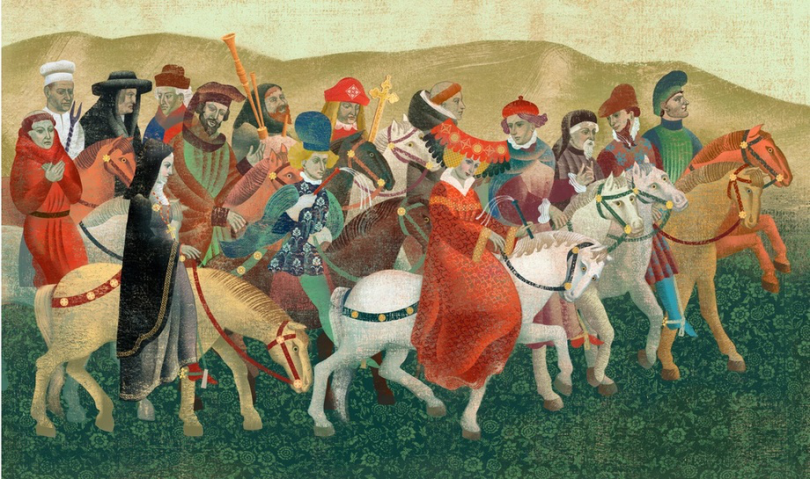
Something that really interested me from Professor Lay’s lecture on October 4th, 2017, titled “Narrative Transgressions and Chaucer’s Man of Law Tale” was the fact that Chaucer read many books about travel and drew from multiple sources to write his tales. Did Chaucer use these other works that were being popular at the time to get inspiration for the characters he included on the pilgrimage?

After doing a bit of research and also talking in my discussion sections, I have learned that Chaucer had often traveled to Italy, France, and Spain where he encountered other writings and works. There is a very high chance that he was inspired to write his tales by Giovanni Boccaccio’s The Decameron. In this work, a group of individuals hiding outside of Florence in a villa to escape the Black Death each tell a story per night in order to pass the time, making it a frame story. The Canterbury Tales is an extremely similar work, with the story following a group of individuals on a pilgrimage, each telling 2 tales on the way to and from Canterbury. Other works by Boccaccio, including Il Teseida which it is said that the Knight’s Tale is based off of,were also influences for Chaucer.

It can also be assumed that Chaucer read and was a fan of the works of Francesco Petrarch, a Renaissance scholar and poet. In the Clerk’s Tale, Chaucer writes,”‘His name was Francis Petrarch, laureate Poet, whose most eloquent rhetoric Illumined Italy with poetry” (Chaucer 209-210). Chaucer used Petrarch’s work titled Grisilde as an inspiration for the Clerk’s Tale, with the Clerk even stating that he has learned the tale he is about to tell from the late Petrarch himself.

Source

Another work that Chaucer was inspired by was the French poem Le Roman de la Rose written by Guillaume de Lorris and Jean de Meun. Chaucer used this work in many of his own but especially in the General Prologue and Prologue of  the Wife of Bath’s Tale. The poem follows a young man who attempts to make his way through the castle to a ‘rosebud,’ which has many interpretations throughout the work, that he desires. The original Wife of Bath, La Vielle, appears in this work and Chaucer borrowed many of her characteristics, such as her overt sexuality and domineering personality, to create his own character.  The Wife of Bath even restates some of La Vielle’s lines before she tells her tale. Chaucer writes, “‘Now listen how I managed things so well, You wives that have the wit to understand! Here’s how to talk and keep the upper hand” (Chaucer 155). These lines, as well as many that follow, discuss ways that women can deceive their husbands. These were taken from a direct translation of La Roman de la Rose.

Chaucer, like those around him, was clearly inspired by the wonderful works being created by the other writers of his time as well as the current events of his life such as the corruption of the Church. Although The Canterbury Tales is hundreds of years old, the story remains timeless and can still be related to society today.

Works Cited and Referenced

Chaucer, Geoffrey, et al. The Canterbury Tales. Oxford University Press, 2011.

Gardham, Julie, and David Weston. “The World of Chaucer: Medieval Books and Manuscripts.” The University of Glasgow Special Collections, special.lib.gla.ac.uk/exhibns/chaucer/influences.html.

Introduction: The Wife of Bath’s Prologue and Tale. hompi.sogang.ac.kr/anthony/Chaucer/WBathIntro.htm.
Lay, Ethna. “Narrative Transgressions and Chaucer’s Man of Law Tale.” Hofstra University Honors College, 4 Oct 2018, Hofstra University, Long Island, NY. Lecture.


“The Wife of Bath and Excerpts from Le Roman De La Rose.” Carson-Newman University, web.cn.edu/kwheeler/documents/Le%20Roman%20de%20La%20Rose.pdf.

Project Summary: Disguise and Deceit as Emancipators and Tests of Loyalty in Homer’s Odyssey

Throughout many Greek myths, disguises and deception are prominent elements of the stories, and Homer’s Odyssey is no exception. Characters in the Odyssey use disguises and deception time and time again for many reasons. From gods such as Athena and Proteus to the likes of Telemachus, there is no discrimination in the use of disguise or deception in this timeless epic. By mapping this motif throughout the epic, readers can see how disguises and deception can be used to allow one to move past the limits of societal expectations and test the loyalties of others.

Menelaus is no Odysseus. Where Odysseus is notable for his cunning tricks and all around cleverness, the same can not be said as a general statement for Menelaus. However, the goddess Eidothea was more than cunning enough to assist Menelaus in a time of dire need. The goddess is the daughter of Proteus, and has grown more than simply tired of her father. When Menelaus and his men require some means by which to become near enough to the god Proteus to capture him and extort information crucial to their journey, the god’s daughter has just the trick, a perfect disguise (and ambrosia). Their disguise passed the inspection of Proteus and allowed the men to capture the old god just as was needed. Here, use of disguise and deceit may have been less than noble, however the noble ends more than justify the means. With no longstanding harm done to proteus and the favor of a goddess earned, Menelaus has done almost nothing more than a cheap trick, unimpressive in comparison to much of what his brother in arms, the King of Ithaca, Odysseus has accomplished. By recounting this story as he does, Menelaus brings himself closer to the man he loves dearly, the man who blinded Polyphemus through deceit and disguise.

Disguises are used throughout the story of the Odysseynot only as means of deception, but to test the loyalty of characters as well. One of the most prominent examples of this is when Athena disguises Odysseus as a beggar and directs him to meet with his swineherd Eumaeus before interacting with anyone else after returning to Ithaca. The main reason Odysseus is directed to do this is so that he can determine who has remained loyal to him in his absence and who hasn’t. Loyalty to Odysseus plays a key role in this point in the story, because the warrior will need support when attacking the suitors, which requires him to first know who he can trust to fight for and with him. Disguises are used in The Odyssey as a means of testing a character’s unbiased loyalty without revealing the true identity of the person they’re loyal to.

In the beginning of the Odyssey, the goddess Athena expresses her desire to help Odysseus reach his homelands. In her effort to do this, she decides to appear to Telemachus, Odysseus’ son. However, she doesn’t want her true identity to be revealed to Telemachus or the suitors in his home. If she were to show up as herself, everyone would recognize her not only because of their depictions of her, but also because of her great and powerful aura. She disguises herself as Mentes, an old friend of Odysseus’ and the leader of the Taphians, to successfully fly under the radar. Athena appears to Telemachus to offer him some advice about how to deal with the suitors trying to marry his mother who are causing madness in his home and abusing his hospitality. Athena, disguised as Mentes, tells Telemachus that she believes Odysseus has survived the war and is alive but having trouble getting home. She also informs him that he must put together a group of twenty men to sail to Pylos and Sparta and ask Nestor and Menelaus if they have heard anything about his father. She tells him that when he returns from this journey, he should use trickery to kill the suitors remaining in his house to get rid of them. Athena, in this case, acts as a guide to Telemachus without him actually knowing that she is helping him. To him, she is just a normal family friend that he would be familiar with receiving advice from.

When half of Odysseus’ men went in search of the home of Circe in Aeaea, all of the men but Eurylochus are lured in to her trap by her beauty and her songs. Circe welcomes all the other men into her home, poisons them with wine and drugs, and turns their bodies into those of pigs. After hearing of the incident from Eurylochus, Odysseus sets off to save his men with the advice of the the god Hermes. He uses a combination of trickery and assistance from the gods in order to overcome Circe and defeat her at her own game of deceit. While Circe’s motives behind her trickery are unclear, Odysseus uses his skill of trickery to save his men for the main reason that he needs his men back in order for them to all eventually leave the island and attempt to return to their homes once again. He has lost plenty of men at this point already, from the giant Polyphemus trapping and eating his men to the Laestrygonians sinking his ships and eating his men as well. This is a situation in which Odysseus uses trickery not to prove the loyalty of someone else to him, but to demonstrate his own loyalty to the remainder of his men.

Disguises and deception are often seen as negative tools used by villains and crooks throughout literature and culture alike, however the Odysseytells a different tale. Homer sings a song for his audience where heroes and gods disguise themselves and deceive family, friends, and foes all for their own reasons. Whether the character is disguised as a lesser man to escape the societal expectation of their class or is deceiving those around them to shine a light on the truth of their allegiances, it is through these methods that the audience comes to learn their true values as emancipators and tests of loyalty.


My First Post

So, here I am at Hofstra, and I am blogging for the first time! It’s been quite weird living in a new place with new people, but now that classes have started, I’m beginning to adjust. I’m not gonna lie, writing online makes me feel a little anxious, but also excited. Putting your work online for everyone to see and critique can definitely be a bit scary, especially as I’ve never really done it before. It’s basically human nature to constantly want to impress others. I’ve really only written small reviews of movies and TV shows online that were really just me for me to break down and understand what I was watching, not for the entertainment of others. I’ve read various blogs before, some of which were academic-related but also others that had to do with topics such as music, fashion, and food. I am excited to have one of my own now. I think it will be really interesting to share my thoughts about the texts we read in class and also be able to see how others are feeling about the same exact thing. I’m especially interested in the Odyssey, as I’ve always really been into Greek mythology, so I can’t wait to write about and analyze that work. I really hope that consistently writing on this blog will help to further improve my writing skills as well as my analysis skills. It’ll also be nice to have this blog to look back on my experience in the end and see how much I’ve grown. I’m gonna end this mess that is my thoughts here. I can’t wait to continue this adventure and get to know everyone better!